Market insights
Why Good Warehouse Space in Bengaluru Is Hard to Find
Bengaluru leased 4.5 million sq ft of Grade A warehouse space in 2026 so far, nearly all its new supply. What that means for businesses searching for space.
Prashanth Balagere6 min read
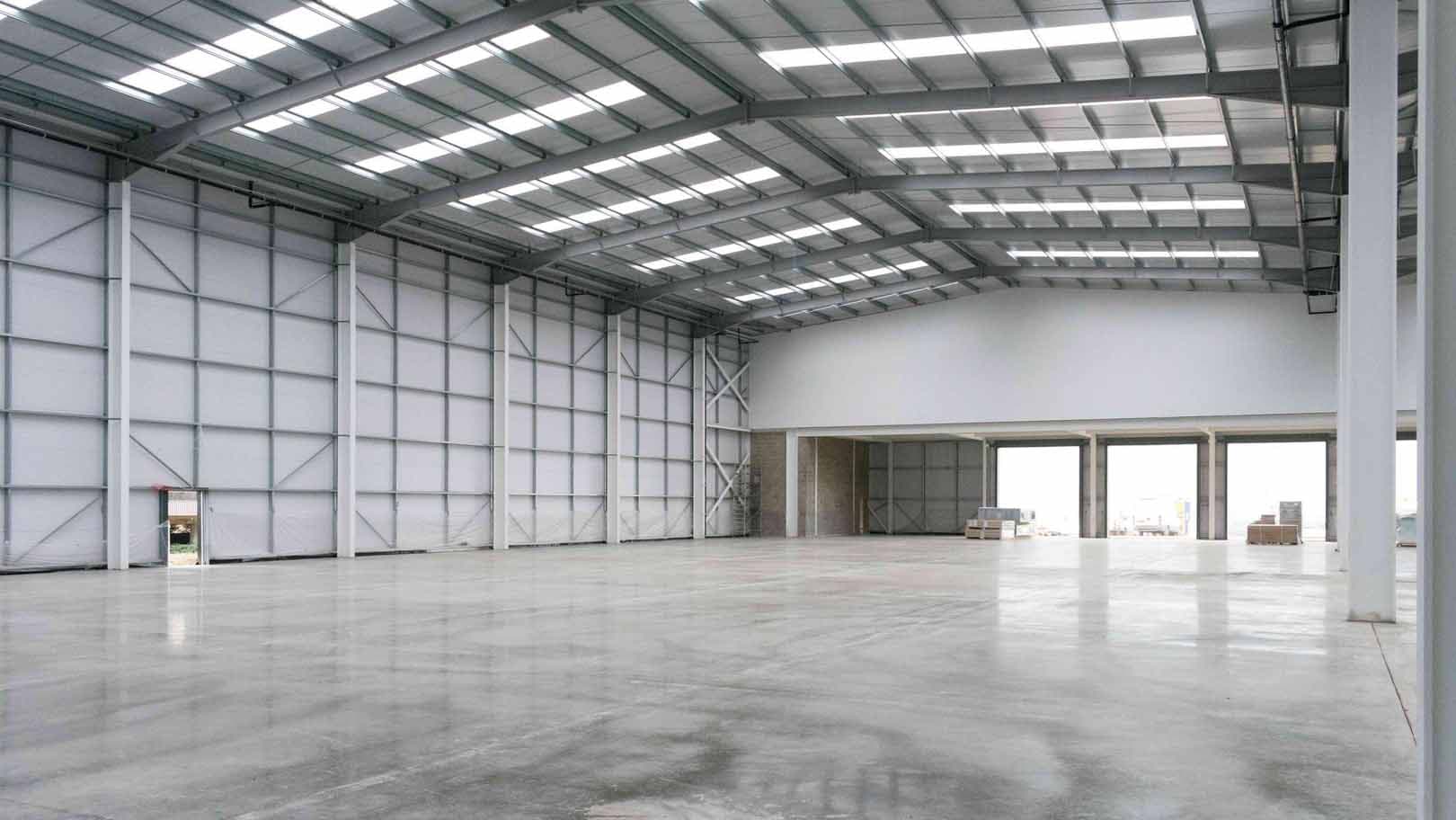
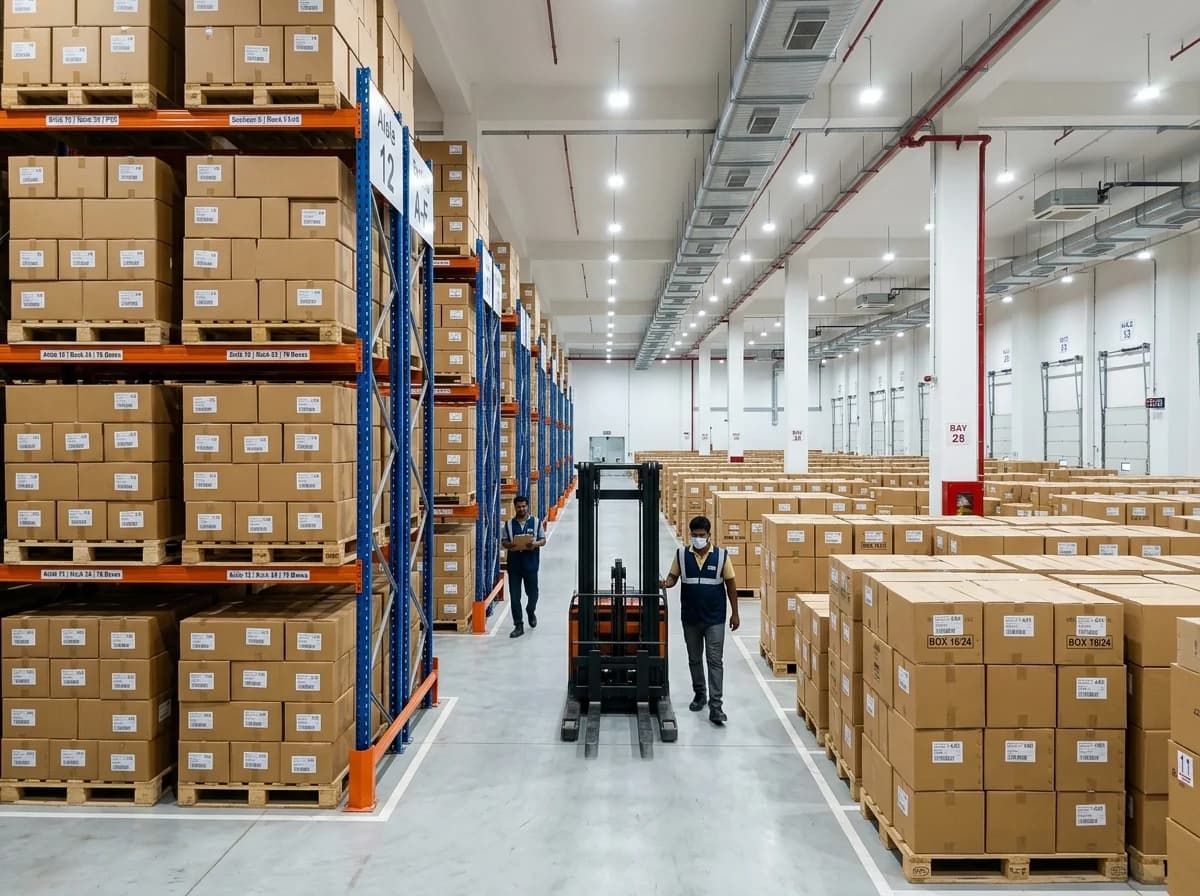
Ask anyone who has tried to rent a warehouse in Bengaluru this year and you'll hear a similar story. The portals look full, yet the right building, at the right size, on the right side of the city, is surprisingly hard to pin down. That isn't bad luck. It reflects how the market has changed in 2026, and it changes how a business should go about the search.
In short
- Bengaluru recorded 4.5 million sq ft of Grade A warehouse leasing in January–September 2026, against 4.4 million sq ft of new supply, according to Colliers. Almost everything being built is being taken.
- Prime Grade A vacancy was 2.2% at the end of June, according to JLL, while a broader measure from Cushman & Wakefield stood at 11%. The shortage is in good buildings, not in space overall.
- Bengaluru took 16% of India’s industrial and logistics absorption in the third quarter, up from 11% a year earlier, on Savills’ numbers.
- Manufacturers and auto companies are now competing with logistics firms for the same buildings, which makes well-located space move faster.
Demand is keeping pace with new supply
Colliers' figures for the first nine months of 2026 show Grade A warehouse leasing in Bengaluru of 4.5 million sq ft, up 61% on the same period last year. New completions over the same months came to 4.4 million sq ft. In the third quarter alone, leasing was 2.0 million sq ft against 1.1 million sq ft of new supply. Colliers singled out Bengaluru and Pune for “strong momentum”, with uptake rising 60–70% a year.
Savills, which measures the market differently, reached a similar conclusion. Bengaluru's share of national absorption rose to 16% in the third quarter from 11% a year earlier, while its share of new supply was 11%. When a city absorbs a larger share of demand than it adds in supply, tenants feel it as fewer choices and quicker decisions.
The research firms use different definitions and building grades, so their numbers shouldn't be added together. They agree on direction, though: Bengaluru is one of the busiest warehouse markets in the country right now.
The shortage is in quality
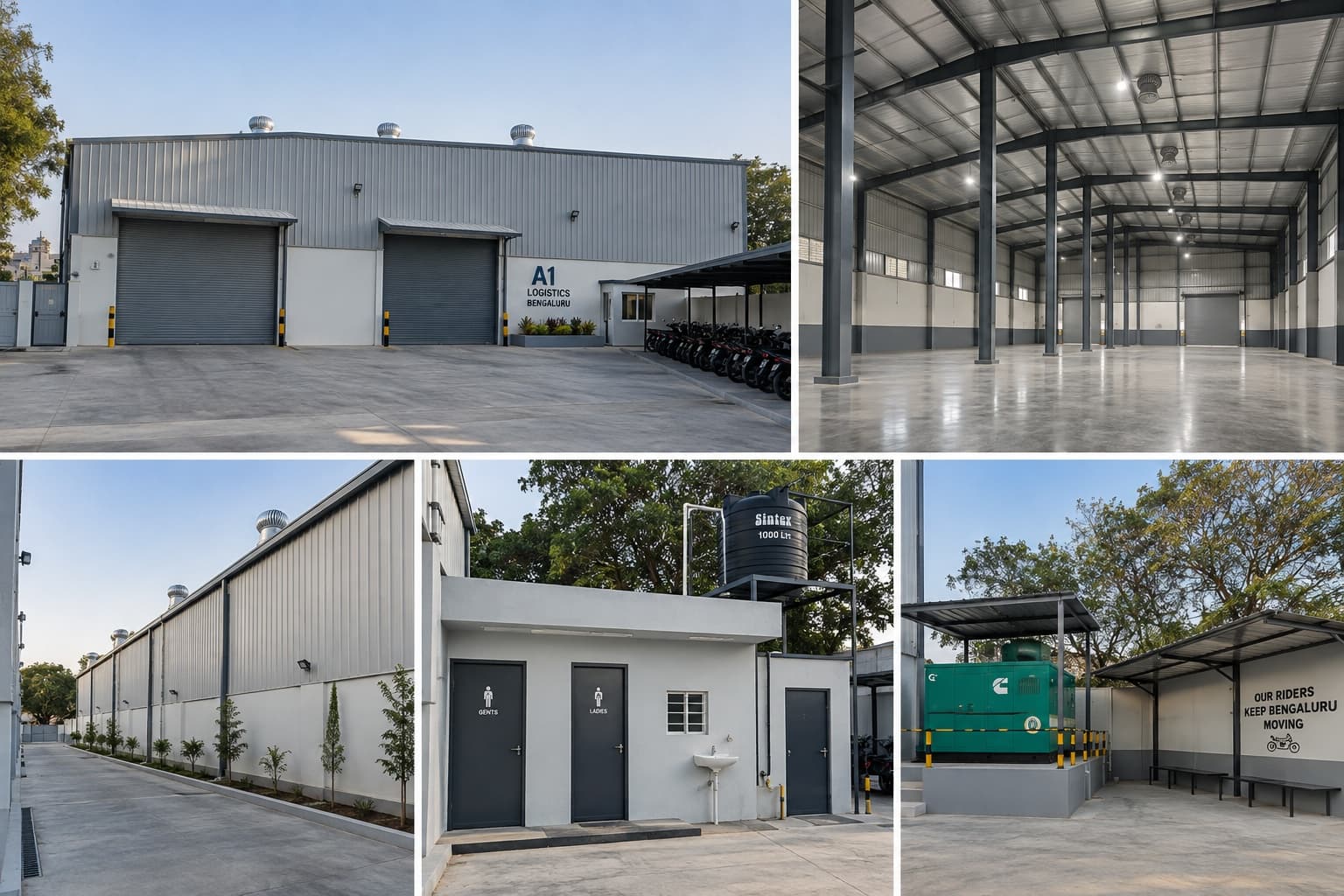
Two vacancy figures explain why a search can feel contradictory. JLL put prime Grade A vacancy in Bengaluru at 2.2% at the end of June. Cushman & Wakefield's broader measure was 11%. In practice, that means modern buildings with good clear height, strong floors, proper docks and reliable power are close to full, while older and smaller sheds are still available.
Nationally, Savills found that Grade A space made up 66% of absorption in the third quarter, up from 52% a year earlier, and described it as a sign of “occupiers' preference for higher-quality facilities”. If your operation needs a modern building, you are competing in the tightest part of the market.
More kinds of businesses want the same buildings
Third-party logistics firms remain the largest group of warehouse tenants, but they no longer dominate the way they once did. In Savills' third-quarter data, manufacturing took 31% of national absorption, ahead of 3PL at 26%, with retail rising to 12%. Colliers reported automobile companies as the fastest-growing segment, with uptake up 70% on the year.
For a tenant, this widens the competition. A building on a good highway corridor might draw interest from a 3PL operator, a component manufacturer and a retailer at the same time. Owners of well-located space rarely need to wait long, and some never need to advertise at all.
Why searching online often falls short
Commercial property listings tend to lag the market. A building can be let before its listing is taken down, and photos, sizes and rents are often out of date. Many owners, especially in the outer corridors, still let or sell through people they know and local brokers rather than through portals. When good space moves quickly, the listings that remain online are often the ones that haven't found a taker yet, for a reason.
None of this means online search is useless. It is a reasonable way to understand price ranges and locations. It just shouldn't be the only way you look.
How to run a better search
Define the requirement precisely
“About 20,000 sq ft near Hoskote” is a starting point, not a requirement. Write down the carpet area you need, clear height, floor load, number of docks, power load, truck access, and the approvals you'll need, such as fire clearance and the right land use. A precise brief rules out unsuitable buildings early and saves wasted site visits.
Start earlier than you think
With good space taken quickly, a search that starts a month before your current lease ends leaves little room to negotiate. Starting three to six months ahead gives you time to compare options, check paperwork and agree fit-out work with the owner before you need to move.
Look at more than one corridor
Bengaluru's warehouse market is concentrated in the west, around Nelamangala and Dabaspete, and in the east, around Hoskote. The ring road linking the two belts means a site on the “other” side can sometimes serve your customers just as well. Areas such as Whitefield, Kadugodi and Sarjapur Road can also suit smaller, city-facing operations. Our East Bengaluru page gives an overview of the eastern corridors.
Check the paperwork before you commit
Title, land use, building approvals and fire clearance decide whether a building can legally be used the way you plan. Problems here are far cheaper to find before signing than after moving in.
Consider building to suit
If nothing available fits, a built-to-suit warehouse, where an owner builds to your specification and leases it to you, is worth considering. It takes longer than renting a ready building, but you get the layout you need rather than adapting to someone else's. We explain how it works on our build-to-suit page.
The bottom line
Bengaluru's warehouse market is busy, and the busiest part of it is the modern, well-located space most businesses want. That makes a precise brief, an early start and a wider search more valuable than ever, and it means some of the best options never reach a listing site.
If you've searched online and haven't found the right warehouse, land or commercial space, our team can help. Tell us what you need on our Find your space page and we'll search the areas you name, including spaces that aren't advertised.
Sources
- Colliers India — Industrial & warehousing demand, January–September 2026 (PR Newswire, 23 Oct 2026)
- PropNewsTime — Savills India: industrial and logistics absorption rises 14.1% in Q3 2026
- JLL — Bengaluru logistics & industrial market, Q2 2026
- Maritime Gateway — Cushman & Wakefield H1 2026: Bengaluru warehouse leasing up 78% to 3.1 msf